24 HOUR SERVICE - 7 DAYS A WEEK





A well-stained deck looks fresh and inviting for years. It protects wood from sun, rain, and daily wear. Choosing the right professional makes all the difference between a beautiful, long-lasting finish and one that peels or fades quickly. Deck staining done by an experienced hand brings out the natural beauty of the wood while adding real protection. You want someone reliable who listens, works cleanly, and stands behind the job.
The search feels easier when you know what to look for. A good choice leaves you with a deck you love to use every season.
Drive around your neighborhood or ask friends who recently stained decks. See how the color holds up after rain or sun exposure. Even staining, no blotches, and clean edges tell you a lot. Photos online help, but real decks show the true skill. Fresh work that still looks good after a few months points to quality.
Read what real customers say on trusted sites. Look for comments about punctuality, cleanup, and how the stain held up over time. A few negative reviews happen to everyone, but watch for patterns. Polite responses to questions show care for clients. That kind of attention usually carries over to the work.
Good staining starts with thorough cleaning. Pros power-wash, sand rough spots, and remove old loose stains. Skipping these steps leads to peeling later.
Ask what products the pro uses to prep. Solid answers show experience and attention to detail.
Different stains suit different needs. Semi-transparent wood grain shows while adding color. Solid stains hide imperfections but cover grain. Clear sealers protect without changing looks. A pro explains which option fits your deck’s age, wood type, and sun exposure. Clear guidance helps you pick wisely.
A legitimate business carries general liability insurance. This protects your home if an accident happens. Ask to see proof, no hesitation means confidence. Licensing rules vary by area. A builder who follows us usually takes the whole job seriously.
Compare several written estimates. Each should list prep work, stain brand and type, number of coats, and total cost. Vague quotes often hide extra charges. Fair pricing feels reasonable for the quality promised. The lowest bid sometimes cuts corners on prep or materials.
A thoughtful pro covers nearby plants, furniture, and walkways. We remove all debris at the end of each day. Your yard stays tidy during and after the job. Ask how the pro handles drips or overspray. Careful habits prevent damage to siding or concrete.
Quality work comes with a warranty. Most pros offer one to three years on materials and labor. Clear terms explain what the warranty covers. A strong guarantee shows belief in the job. You feel secure knowing help is available if needed.

One reliable team that delivers this careful approach is Decker Service Professionals. We focus on prep and clean finishes and earn trust from homeowners. For homes that need matching touch-ups, a quick exterior painting refresh often pairs well with fresh deck stain.
Walk the deck together when the job ends and review the deck staining closely. Check for even color, missed spots, and smooth rails. Point out anything that needs fixing. A good pro handles touch-ups right away. This final check ensures the deck staining meets your expectations, so you pay only when you feel completely happy with the results.
A properly stained deck invites you outside more often. Morning coffee feels nicer. Evening barbecues last longer. The wood stays protected and beautiful season after season. The right professional makes that enjoyment possible without worry. Ready to refresh your deck? Reach out to a trusted staining expert today and enjoy the results you deserve.
1. How often should a deck be stained?
Most decks need restaining every 2–4 years. Sun exposure, weather, and foot traffic affect the timeline.
2. What is the best time of year to stain a deck?
Late spring or early fall works best. Mild temperatures and low humidity help the stain dry evenly without rushing.
3. Can I stain over old stains?
Yes, if the old stain is in good shape. A pro cleans and lightly sands first so the new coat bonds well.
4. How do I know if the deck needs staining or sealing?
Sprinkle water on the wood. If it beads up, the deck still has protection. If it soaks in quickly, it needs a new coat.
5. What prep work should a professional do?
Power washing, sanding, repairing damaged boards, and masking off nearby areas all help the stain last longer.
What Are the Real Benefits of Kitchen Remodeling Today?A kitchen often carries the rhythm of daily life. It is where mornings begin, meals come together, and quiet conversations happen. When the space no longer works well, stress can creep in without notice. Remodeling offers a gentle way to reset that balance. Working with kitchen remodeling contractors Kansas City KS can help turn a tired kitchen into a place that feels calm, useful, and welcoming again. The goal is not just style. It is comfort, ease, and better flow for everyday living.
A remodeled kitchen supports how people live today. It creates room to move, cook, gather, and relax. Small changes can make a big difference over time.
Kitchen updates are not only about looks. They shape how smoothly each day runs.
• Improve layout for easier movement
• Add smart storage to reduce clutter
• Create better lighting for daily tasks
• Support safer cooking and cleaning
• Make the space feel more open and relaxed
An updated layout can remove tight corners and awkward steps. This helps cooking feel less rushed. Storage upgrades reduce countertop mess. Clear counters create mental calm. Lighting also plays a big role. Better light helps with food prep and creates a warm mood. It reduces eye strain and makes the kitchen feel inviting.

A kitchen remodel adds value that lasts well beyond the first impression.
• Increase home value over time
• Improve energy efficiency
• Reduce repair and maintenance needs
• Support modern living habits
• Strengthen overall home function
Updated kitchens often appeal to future buyers. Even for those staying long-term, the investment pays off in comfort. Energy-efficient appliances and lighting reduce monthly costs. Better insulation and ventilation support indoor comfort. These updates work quietly in the background.
Projects that include kitchen and bath remodeling Kansas City often create balance across the home. When key spaces work well, daily routines feel smoother. Midway through projects, trusted teams likeDecker Service Professionals often guide homeowners with patience and clarity. That support makes the process feel manageable, not overwhelming.
New kitchens feel different because they are designed with real life in mind. Function comes first, then style follows naturally. Modern layouts focus on flow. Storage hides clutter. Surfaces clean easily. Everything has a purpose.
Contact USColors and finishes now lean toward calm tones. These choices reduce visual noise and help the space feel grounded. Technology also supports ease. Soft-close drawers, touch faucets, and efficient appliances reduce effort during daily tasks. These changes are subtle. Yet over time, they shape a calmer home environment.
A common worry is disruption. Good planning helps avoid that. Clear timelines, honest communication, and thoughtful design reduce stress. Knowing what to expect helps homeowners feel in control. Small updates can still make a difference. Even partial remodels improve comfort without a full overhaul. Working with experienced kitchen remodeling contractors Kansas City KS helps keep the process steady and predictable.
Kitchen remodeling today is about more than trends. It is about shaping a space that supports real life. When movement feels easier and clutter fades, stress lowers naturally. The right updates bring balance. The kitchen becomes a place of comfort again. Cooking feels less rushed. Conversations flow more easily.
With thoughtful planning and steady guidance, remodeling feels less like a project and more like a reset. Over time, the value shows in daily comfort and ease. In some cases, options from kitchen cabinet refacing companies can also support this goal without full replacement, offering a lighter path to meaningful change. A remodeled kitchen does not shout for attention. It simply works better, day after day, supporting a calmer and more connected home. Schedule a consultation with experienced kitchen remodeling contractors in Kansas City KS to explore what works best for your home
Professional Basement Remodeling Services1. How long does a kitchen remodel usually take?
Most projects take a few weeks, depending on size and scope.
2. Is kitchen remodeling worth the cost?
Yes. It adds comfort, function, and long-term value.
3. Can I remodel without changing everything?
Absolutely. Small updates like storage or lighting still help.
4. Do I need to leave my home during remodeling?
Often no. Many projects allow homeowners to stay.
5. What is the best time to remodel a kitchen?
Any time works with proper planning and support.
A home begins to feel different the moment its walls change. Color has a quiet power. It can lift moods, calm busy thoughts, and make rooms feel warm and welcoming again. That is where professional painting makes a real difference, not just on walls, but in daily living.
The work of residential interior painters Liberty, MO goes beyond adding fresh color. It shapes how a space feels when you walk in after a long day. Soft tones can bring peace. Brighter shades can add energy. The right finish can make a room feel clean, balanced, and cared for.
A new paint job often changes how people feel inside their homes. It creates a sense of renewal. It also helps spaces feel more personal and intentional.
2. Light shades can make rooms feel open and airy
3. Warm tones add comfort and coziness
4. Clean walls bring a sense of order
5. Fresh paint helps homes feel cared for
Because color affects mood, painters often guide homeowners through choices. This support matters. Studies in color psychology show that softer blues and greens can ease tension, while warm neutrals promote comfort. With the right guidance, a home can support emotional well-being every day.
Contact USPaint looks best when the surface beneath it is ready. Preparation is one of the biggest reasons professional work stands out.
2. Old stains are sealed properly
3. Uneven areas are smoothed
4. Trim lines stay clean and sharp
5. Furniture and floors stay protected
Skipping preparation often leads to peeling or uneven finishes. Professionals take time to prep because they know it affects durability. Research in home maintenance shows that proper surface prep can extend paint life by several years. That means fewer touch-ups and better value over time.
Choosing a color is not just about trends. It is about how you live.
2. Calm tones work well in bedrooms
3. Brighter shades energize play areas
4. Neutral colors support flexible décor
5. Accent walls add interest without overload
Painters often ask how rooms are used. This helps them suggest finishes that last. For example, semi-gloss works well in kitchens and baths, while matte finishes feel softer in living spaces. These small choices shape daily comfort.
Window Replacement CompanyInterior painting often pairs well with other upgrades. When walls look fresh, other features stand out more. For homeowners planning projects like a deck builder service in Liberty, MO, interior updates help the whole home feel updated. Clean, modern interiors complement outdoor improvements and boost overall home value.
Real estate studies show that fresh paint can increase buyer interest and perceived value. Even for those staying put, that uplift feels rewarding.
Paint protects walls as much as it beautifies them. Quality products create a barrier against wear.
2. Protects drywall and plaster
3. Makes cleaning easier
4. Slows aging of surfaces
Professionals choose products suited to each room. That care extends the life of walls and reduces future repairs. Over time, this protection saves money and effort.
The difference is not just visual. It is emotional. A freshly painted home feels lighter. It invites rest and connection. The work of residential interior painters Liberty, MO brings skill, care, and intention into every room. That combination creates spaces that feel welcoming and lived-in, yet polished.
Paint has a quiet way of changing how a home feels. It refreshes without noise and improves without disruption. With the right professionals, like Decker Service Professionals, the process feels smooth and reassuring. A thoughtful paint job supports comfort, protects surfaces, and brings out the best in a home.
When walls reflect care and intention, daily life feels easier and more grounded. That is the lasting value of professional interior painting. Choosing the right painters is often the first step toward that feeling.
1. How much do residential interior painters cost?
Costs vary depending on the size of your home, type of paint, and complexity of the job.
2. How long does it take to paint a house interior?
A typical home interior may take 3 to 7 days, depending on preparation, number of rooms, and paint type.
3. What are the best paint colors for a home interior?
Soft neutrals, blues, and greens are popular for calm, inviting spaces. Bright colors can be used as accent walls to add personality.
4. Should I hire professional painters or DIY?
While DIY painting can save money, professional painters ensure quality finishes, faster completion, and less stress.
5. How do I prepare my home for interior painting?
Clear furniture, cover floors, and remove wall hangings. Your painter will handle further preparation like sanding, priming, and patching walls.
Choosing the Best Deck Stain and SealerThere are four basic types of deck finishes: solid, semi-solid, semi-transparent and clear stains. The main difference between each one, is the amount of pigmentation they contain. From a solid stain to a clear sealer you will find less and less pigmentation. The pigmentation is finely ground particles that are designed to add color and block the surface from UV rays and prevent the natural graying that the sun will cause.
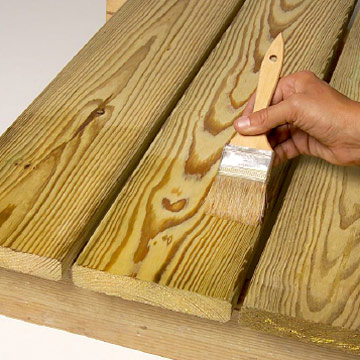
These stain really don’t stain as there is no pigmentation for the wood to absorb. Sealers “seal” the wood from the elements and typically last a year or two. After that you need to re-coat. These sealers are easy to apply and makes your maintenance quicker and easier, but they require more frequent application.
Sealers come in either water or oil-based formulation. They may contain a few ingredients to absorb the suns UV rays, but do not block them as there are no pigments that could block them.
Besides the ease of application, clear finishes allow the natural wood grain to show through. This can be appealing with cedar and redwood decking, but consider a semi-transparent stain that still allow the wood grain to show through.
The next step on the gradient of increasing opacity are the semi-transparent stains. They are sometimes called toners.
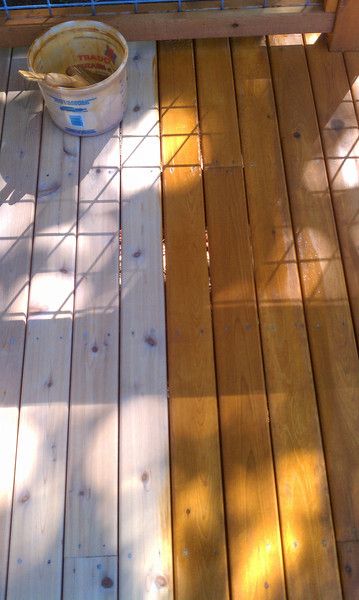
These stains contain UV blocking pigments that offer more protection from UV damage and they are clear enough to allow most of the wood grain to show. Indeed, semi-transparent stains enhance the grain. These stains come in a variety of colors and tones. Re-coating your deck depends on several variable including sun exposure, foot traffic and the weather in your area. And as we all know, the weather in Kansas City can sometimes be brutal. Horizontal surface requires the most maintenance and you can count on 2-3 years before you need to re-apply.
Horizontal surfaces include the deck surface you walk on as well as the top of the hand rail. This extra time between coats decreases the maintenance cycle over clear sealers, but potentially increases the difficulty of refinishing the surfaces due to the pigments that remain on the surface.
Many stains call for a removal of previous coatings before applying the new stain. This is especially true when switching from one brand of stain to another. Depending on exposure to the weather and the stains age, a wood cleaner may remove some semitransparent stains. However, in other cases a stain stripper (like a paint stripper) is more effective as well as more difficult.
Stain strippers will soften and partially dissolve most semitransparent deck stains so they can be rinsed, scrubbed away, or pressure washed away. Semi-solid and solid stains may take multiple applications of the strippers and some sanding in corners and tough to reach areas. A stripper will also clean your deck at the same time, so it’s not necessary to use a deck cleaner after stripping.
Pro Tip A good way to test if you need to use a stripper is by using the absorption test. Pour a small amount of water on the decking in high traffic areas as well as the low-traffic areas. If the water beads up, then too much stain or sealer is present, and you will need to strip it. However, if the water begins to absorb into the wood within 5-10 minutes, then the coating has worn off enough that you can re-stain or re-seal the decking. But beware of applying a lighter color stain over any darker remaining pigments. If they are not removed by cleaning or stripping, they may show through, leaving a blotchy appearance.
Since many semi-transparent stains soak into the grains of the wood, they last longer than most clear sealers and provide stronger protection against the elements. Also, due to their ingredients, they are much less likely to crack and peel off the deck surface.

The most opaque finishes include the semisolid and solid stains. Each contain a lot of pigmentation, and pigmentation is what blocks UV rays. Both of these stains come in a wide range of colors that can spruce up the uniformity of old pressure treated decking. These stains last longer than the others — up to five to eight years —So you may be thinking that solid or a semi-solid stains are best option. However, many of the solid stains are basically a water based or oil-based paint, and paints on horizontal surfaces do not hold up well.
There are a few problems with semisolid and solid finishes. In many cases, depending on your skill level, they may show brush marks when the surfaces do not dry evenly. The best advice is to apply the finish on just a few of deck boards at a time, following them from one end to the other, always keeping a wet edge, and then move on to the next section.
Semisolid and solids will make wear patterns on the deck more obvious, and they require the most prep work before they can be recoated. Sometimes, the manufacturer may recommend that the surface be stripped before any new finish is applied. Semisolid stains do offer more protection for a longer period of time, but they’re harder to apply evenly and require more work during the preparation. They will eventually chip, flake, and wear off on horizontal surfaces due to traffic and exposure to weather
A solid stain is basically a type of paint that is typically thinner than ordinary exterior paint. Remember, All paints form a film designed to block sun and water for long stretches of time. This attribute make paint the ideal coating for your vertical surfaces like exterior trim and siding. But solid stains are not an advantage for the horizontal deck surfaces. Foot traffic wears through the stain and the freeze/thaw cycle loosens and cracks the finish. It begins to bubble and chip away, leaving a less than ideal look to your deck. A penetrating deck stain is designed to protect you deck without forming a film.

Film-forming stains and paints develop hairline cracks over time. When they do, rain gets beneath the film and stays there. That means there is a perfect environment for bacteria and mold underneath the “paint”. Bacteria and mold lead to decay and rot. Additionally, when the water freezes, it expands and the cracks turn into chips that expose the surface to additional exposure from the elements.
Highly opaque solid deck stains can be paint-like in this respect. Homeowners sometimes take a look at the result of the first coat and think the deck needs multiple coats. Yet when they try to make the surface of the deck look as uniform as a freshly painted wall by applying more finish, the stain morphs into a film-forming finish (paint).
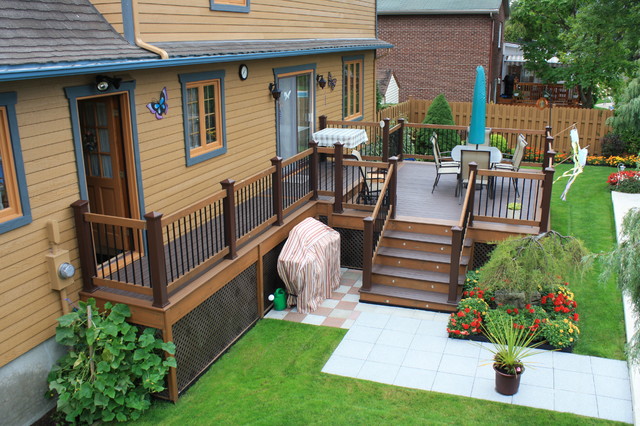
Many people are choosing to finish their decks with a two-tone scheme where the deck vertical surfaces like balusters/spindles, posts and other vertical portions of the deck are coated with semi-solid or solid stain, while the horizontal surfaces are coated with a penetrating sealer or semi-transparent stain. The vertical surfaces don’t take the same amount of punishment as the horizontal surfaces and the semi-solid or solid stain last longer and still look good on vertical surfaces. This reduces your maintenance cycle for the verticals. You still have a more frequent cycle with the horizontals, but there is less area to cover. One downside is that it’s a more tedious application process as you need to cut in your decking surface around your posts and other areas by hand.
For many reasons, acrylic latex paint has gradually replaced traditional oil-based formulations, and manufacturers are showing equal resolve in developing water-based deck finishes. There have been steady improvements in their durability.
Some say that water-based finishes can be as durable as oil-based. Water-based finishes wear differently than oil-based penetrating stains. Like solid stains, they tend to eventually flake and peel away. Also, when it comes time to refinish, water-based stains are more likely to require stripping the deck to bare wood. Strippers that can remove water-based finishes are becoming more and more available, but when tackling a deck that’s been finished with a water-based product you may need to sand before applying the new finish.
Linseed and soy oils have been traditional choices by manufactures when producing oil-based stains. They apply easily and they penetrate deeper than water-based coatings and they wear gradually due to traffic and never chip and peel.
However, natural oils have some disadvantages: First, these stains contain more VOC’s than water-based coatings do — and VOC’s (volatile organic compounds) that are falling under government regulations in many states.
Second, natural oil can become food for mold. In the right environment, moist, warm, and not a lot of sunlight, mold can thrive. If you deck is situated in a similar environment, consider adding a fungicide to the mix to control that potential problem.
Also, consider using modified oils or Alkyds. They don’t have the same potential for mold growth. Alkyds are more expensive than natural oils, but make up for that by curing faster and lasting longer.
No Definitive Answer
If you’re looking for the single best deck finish, one that works on every deck in all situation, not matter what, then you will be frustrated. Believe me, I’ve been there. But weighing the pro and cons of each type of finish, acceptable maintenance levels, and comparing that to your individual deck situation (sun, shade, freeze/thaw, and other exposure considerations) will help you choose the best stain for your deck. Should you need some assistance, please reach out.
Kansas City Deck Cleaning or StrippingCleaning or stripping your deck of the previous coating is important before applying new coatings. Decks in Kansas City are exposed to the extremes when it comes to weather. From sub-freezing in the winter to sweltering hot in the summer with humidity levels often in the 80’s. With this kind of fluctuation, you can’t afford to make mistakes when it comes to your outdoor wood structures like decks, gazebos, fences and other wooden structures.
We are often times called to restore a deck that has been neglected or improperly cared for. One of the mistakes we see is when do-it-yourself homeowners don’t prepare their decks properly before staining and sealing.
One mistake often made by DIYers is applying stain to a deck that hasn’t been properly prepared in advance. Accumulated dirt, mildew, mold, grease, or leaf tannin should never be left on the deck when you apply the stain.
By cleaning the wood and protecting it with a quality wood stain or sealer, you are locking out moisture, blocking harmful UV, and protecting the deck from the environment. Properly cleaning the wood ensures a better overall appearance and a longer lasting structure. When cleaning is not performed or is poorly done, stain does not penetrate properly and will lead to frustration and more work.

Only a clean and porous wood surface can absorb the stain. Absorption of the stain is critical to the success of the project. When the wood soaks up the stain, this allows the stain to perform just the way you want and need it to. Cleaning the surface also brings out the beauty of the wood itself, this is especially important for clear and semi-transparent stains where you want the wood grain to show.
There are several products on the market that will get the job done. Depending on the current condition of your deck, both deck strippers and deck cleaners can properly prepare the wood and clean it before you begin to apply any stains or stain/sealers. But how do you know which to use?
If you’ve never applied a stain before, a cleaner will suffice. If your deck is just an older deck, kind of grubby, and has grayed or darkened wood it may just need a deck cleaner. A quality deck cleaner is powerful enough to get rid of most dirt, mold, and mildew stains.
PRO TIP
Splash some water on the wood and see if it absorbs into the wood or if it beads up and sits on top. Beading up would indicate there is some type of old failed stain on the wood that needs to be removed.
Often when staining a previously stained deck, you will need to remove the remaining old stain which can sometimes be hard to remove. In this case, a deck stripper should be used instead of the Deck Cleaner. The advantage that strippers have is that they will soften and ‘dissolve’ most stains making them easy to be washed or wiped away. On top of that, deck strippers clean away mildew and get rid of the graying too, so there’s no reason to use a cleaner after a stripper.
Understanding the condition of your wood surface before you strip is important because not all decks need to have the previous coating removed. Your intended end result is important too. Keep in mind, if you’re lightening the opacity (going from a solid to a semi-transparent finish) or making a dramatic color change (especially dark to light), then stripping is required. The same is true if the stained or painted surface has experienced extreme weathering, chipping, cracking, or blistering of the previous coating.

Another common mistake homeowners make is not using a wood brightener. Look at the photo to the left, a brightener was used after the cleaning was done. Brighteners make a big aesthetic difference. A brightener will not only lighten the tone, it neutralizes the wood after using the deck cleaner or deck stripper. Brighteners are an important part of the restoration process. They lower the Ph of the boards and allow the pores to ‘breathe’ making them more accepting and open to absorbing your new stain.
If you’re having a tough time figuring out whether your deck has been stained in the past or if you need some professional advice before you start your project, let us know.
Oil-Based Deck Stain vs. Water-Based Stain
Kansas City, MO:
For homeowners seeking a deck stain for their outdoor decks, the choice of stain can feel like a pivotal decision. And it is. It’s an investment in both aesthetics and longevity, guarding against the effects of sun, rain, and everyday wear. For years, oil-based stains reigned supreme, lauded for their deep penetration and robust protection. However, the rise of water-based formulations has introduced a compelling alternative, sparking a debate that often leaves homeowners scratching their heads: which is truly the best for their beloved deck?
Having navigated hundreds of deck staining projects and witnessed the use of both oil-based and water-based options, including a personal journey that revealed the persistent chipping and peeling even in high-quality acrylics water-based deck stains, I want to provide an in-depth, experience-driven comparison to help you make an informed decision. This isn’t just a recitation of manufacturer claims.
The Legacy of Oil-Based Stain: Deep Penetration and Enduring Protection
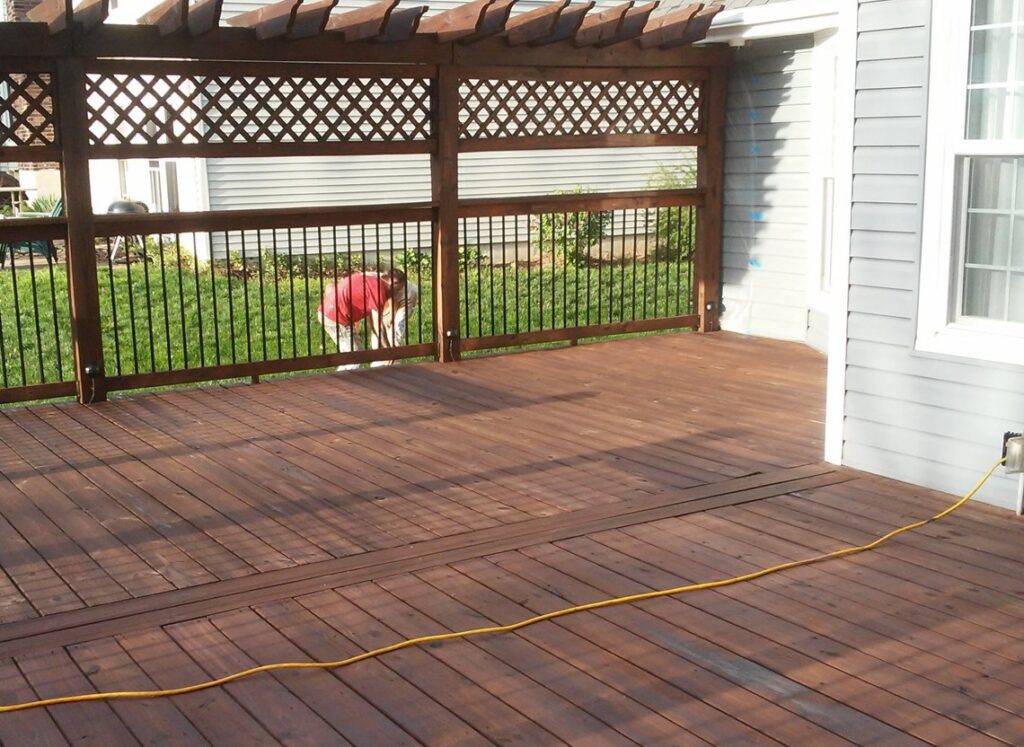
For decades, oil-based stains were the undisputed champion for exterior wood. Linseed oil has been used as a wood finish for centuries, and its use in Yellowstone National Park’s historic log buildings, including the Old Faithful Inn, has been documented since at least 1903. Their inherent properties offered a compelling package of benefits:
However, the reign of oil-based deck stains isn’t without its caveats:
The Rise of Water: Convenience and Environmental Consciousness
If your shopping for deck stain, water-based stains have emerged as a strong contender in most large home improvement stores. This is driven by

Despite these compelling benefits, the experience of many, including my own, highlights some critical considerations for Oil-Based Deck Stain vs. Water-Based Stain deck stains on demanding outdoor decks:
Water-based Stain Vs. Paint
Both water-based stains and paints rely on a similar foundation of pigments for color, water as a carrier, and acrylic or other synthetic resins as binders to adhere to the wood. However, the most significant difference lies in their formulation objectives: water-based deck stains are engineered with a lower pigment and binder concentration to color the wood while in some cases allowing its natural grain to remain visible (in the case of semi-transparent water based) and often to penetrate the surface slightly, whereas water-based paints are formulated with a much higher pigment and binder load to create an opaque film that conceals the wood grain and provides a substantial layer of surface protection. Solid water-based stains have more pigmentation that mimics paint.
Research into Oil-Based Deck Stain vs. Water-Based Stain
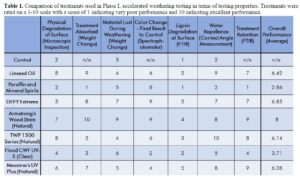
I would be remiss not to mention this long-term study initiated in the summer of 2015 to evaluate protective treatments for historic log structures in Grand Teton National Park. It underscores the complexities of achieving durable wood protection. Research conducted on wood coatings for historic structures provides a comparison between various treatments for outdoor wood. This study evaluated several products, including both oil-based and water-based stains, by assessing physical surface degradation, material loss, color stability, and water repellency. The initial findings indicated that the oil-based Armstrong’s Wood Stain (Natural) exhibited the highest overall performance across these metrics. In contrast, a water-based acrylic stain demonstrated lower overall effectiveness/
The initial results from this research produce valuable insights into the comparative performance of various wood treatments, highlighting that even established solutions can exhibit different strengths and weaknesses under real-world weathering conditions. It can be found here:
https://journals.uwyo.edu/index.php/uwnpsrc/article/download/4105/4105
The Verdict: Oil-Based Deck Stain vs. Water-Based Stain
Ultimately, there is no universally “best” stain for every deck. The optimal choice hinges on a multitude of factors specific to your project:
 initial application of oil-based stains might offer longer intervals before reapplication in some cases, the cleanup and potential stripping can be more involved. Water-based stains often allow for easier recoating with proper preparation.
Experience: Oil-Based Deck Stain vs. Water-Based Stain
Based on my experience of Oil-Based Deck Stain vs. Water-Based Stain, particularly the frustrating reality that even high-quality acrylics will chip and peel on outdoor decks, I urge homeowners to approach the “water-based is always better now” narrative with caution despite what many contractors tell you. While water-based stains have made significant strides, the fundamental challenge of a film-forming coating for outdoor wood structures is that they constantly get wet, dry-out, freeze, then thaw (constantly moving), which puts tremendous pressure on the film. This is what causes chipping and peeling even on a perfectly prepared surface.
For demanding deck staining environments, especially those with significant exposure and wood movement, a high-quality penetrating oil-based deck stain might still offer superior long-term protection against the elements and the dreaded chipping and peeling. While the VOCs and cleanup are drawbacks, the deep penetration and lack of a thick surface film can lead to better adhesion and less maintenance headaches down the line.
However, if low odor, quick drying times, and environmental considerations are paramount, and you are meticulous about surface preparation and application, a premium water-based deck stain specifically formulated for exterior decks can be a viable option. Be prepared for potentially more frequent reapplication and vigilant maintenance to prevent film breakdown.
Oil-Based Deck Stain vs. Water-Based Stain
The key takeaway is to move beyond broad generalizations and delve into the specifics of your project, the quality of the product, and the crucial steps of preparation and application. The “best” stain isn’t a universal truth; it’s the one that best meets the unique demands of your deck and your personal priorities. Don’t be swayed solely by marketing claims; consider the long-term implications and the potential for the unsightly reality of a peeling deck.
There are four basic types of deck finishes: solid, semi-solid, semi-transparent and clear stains. The main difference between each one, is the amount of pigmentation they contain. From a solid stain to a clear sealer you will find less and less pigmentation. The pigmentation is finely ground particles that are designed to add color and block the surface from UV rays and prevent the natural graying that the sun will cause.
These stain really don’t stain as there is no pigmentation for the wood to absorb. Sealers “seal” the wood from the elements and typically last a year or two. After that you need to re-coat. These sealers are easy to apply and makes your maintenance quicker and easier, but they require more frequent application.
Sealers come in either water or oil-based formulation. They may contain a few ingredients to absorb the suns UV rays, but do not block them as there are no pigments that could block them.
Besides the ease of application, clear finishes allow the natural wood grain to show through. This can be appealing with cedar and redwood decking, but consider a semi-transparent stain that still allow the wood grain to show through.
The next step on the gradient of increasing opacity are the semi-transparent stains. They are sometimes called toners.
These stains contain UV blocking pigments that offer more protection from UV damage and they are clear enough to allow most of the wood grain to show. Indeed, semi-transparent stains enhance the grain. These stains come in a variety of colors and tones. Re-coating your deck depends on several variable including sun exposure, foot traffic and the weather in your area. And as we all know, the weather in Kansas City can sometimes be brutal. Horizontal surface requires the most maintenance and you can count on 2-3 years before you need to re-apply.
Horizontal surfaces include the deck surface you walk on as well as the top of the hand rail. This extra time between coats decreases the maintenance cycle over clear sealers, but potentially increases the difficulty of refinishing the surfaces due to the pigments that remain on the surface.
Many stains call for a removal of previous coatings before applying the new stain. This is especially true when switching from one brand of stain to another. Depending on exposure to the weather and the stains age, a wood cleaner may remove some semitransparent stains. However, in other cases a stain stripper (like a paint stripper) is more effective as well as more difficult.
Stain strippers will soften and partially dissolve most semitransparent deck stains so they can be rinsed, scrubbed away, or pressure washed away. Semi-solid and solid stains may take multiple applications of the strippers and some sanding in corners and tough to reach areas. A stripper will also clean your deck at the same time, so it’s not necessary to use a deck cleaner after stripping.
Pro Tip A good way to test if you need to use a stripper is by using the absorption test. Pour a small amount of water on the decking in high traffic areas as well as the low-traffic areas. If the water beads up, then too much stain or sealer is present, and you will need to strip it. However, if the water begins to absorb into the wood within 5-10 minutes, then the coating has worn off enough that you can re-stain or re-seal the decking. But beware of applying a lighter color stain over any darker remaining pigments. If they are not removed by cleaning or stripping, they may show through, leaving a blotchy appearance.
Since many semi-transparent stains soak into the grains of the wood, they last longer than most clear sealers and provide stronger protection against the elements. Also, due to their ingredients, they are much less likely to crack and peel off the deck surface.
The most opaque finishes include the semisolid and solid stains. Each contain a lot of pigmentation, and pigmentation is what blocks UV rays. Both of these stains come in a wide range of colors that can spruce up the uniformity of old pressure treated decking. These stains last longer than the others — up to five to eight years —So you may be thinking that solid or a semi-solid stains are best option. However, many of the solid stains are basically a water based or oil-based paint, and paints on horizontal surfaces do not hold up well.
There are a few problems with semisolid and solid finishes. In many cases, depending on your skill level, they may show brush marks when the surfaces do not dry evenly. The best advice is to apply the finish on just a few of deck boards at a time, following them from one end to the other, always keeping a wet edge, and then move on to the next section.
Semisolid and solids will make wear patterns on the deck more obvious, and they require the most prep work before they can be recoated. Sometimes, the manufacturer may recommend that the surface be stripped before any new finish is applied. Semisolid stains do offer more protection for a longer period of time, but they’re harder to apply evenly and require more work during the preparation. They will eventually chip, flake, and wear off on horizontal surfaces due to traffic and exposure to weather
A solid stain is basically a type of paint that is typically thinner than ordinary exterior paint. Remember, All paints form a film designed to block sun and water for long stretches of time. This attribute make paint the ideal coating for your vertical surfaces like exterior trim and siding. But solid stains are not an advantage for the horizontal deck surfaces. Foot traffic wears through the stain and the freeze/thaw cycle loosens and cracks the finish. It begins to bubble and chip away, leaving a less than ideal look to your deck. A penetrating deck stain is designed to protect you deck without forming a film.
Film-forming stains and paints develop hairline cracks over time. When they do, rain gets beneath the film and stays there. That means there is a perfect environment for bacteria and mold underneath the “paint”. Bacteria and mold lead to decay and rot. Additionally, when the water freezes, it expands and the cracks turn into chips that expose the surface to additional exposure from the elements.
Highly opaque solid deck stains can be paint-like in this respect. Homeowners sometimes take a look at the result of the first coat and think the deck needs multiple coats. Yet when they try to make the surface of the deck look as uniform as a freshly painted wall by applying more finish, the stain morphs into a film-forming finish (paint).
Many people are choosing to finish their decks with a two-tone scheme where the deck vertical surfaces like balusters/spindles, posts and other vertical portions of the deck are coated with semi-solid or solid stain, while the horizontal surfaces are coated with a penetrating sealer or semi-transparent stain. The vertical surfaces don’t take the same amount of punishment as the horizontal surfaces and the semi-solid or solid stain last longer and still look good on vertical surfaces. This reduces your maintenance cycle for the verticals. You still have a more frequent cycle with the horizontals, but there is less area to cover. One downside is that it’s a more tedious application process as you need to cut in your decking surface around your posts and other areas by hand.
For many reasons, acrylic latex paint has gradually replaced traditional oil-based formulations, and manufacturers are showing equal resolve in developing water-based deck finishes. There have been steady improvements in their durability.
Some say that water-based finishes can be as durable as oil-based. Water-based finishes wear differently than oil-based penetrating stains. Like solid stains, they tend to eventually flake and peel away. Also, when it comes time to refinish, water-based stains are more likely to require stripping the deck to bare wood. Strippers that can remove water-based finishes are becoming more and more available, but when tackling a deck that’s been finished with a water-based product you may need to sand before applying the new finish.
Linseed and soy oils have been traditional choices by manufactures when producing oil-based stains. They apply easily and they penetrate deeper than water-based coatings and they wear gradually due to traffic and never chip and peel.
However, natural oils have some disadvantages: First, these stains contain more VOC’s than water-based coatings do — and VOC’s (volatile organic compounds) that are falling under government regulations in many states.
Second, natural oil can become food for mold. In the right environment, moist, warm, and not a lot of sunlight, mold can thrive. If you deck is situated in a similar environment, consider adding a fungicide to the mix to control that potential problem.
Also, consider using modified oils or Alkyds. They don’t have the same potential for mold growth. Alkyds are more expensive than natural oils, but make up for that by curing faster and lasting longer.
No Definitive Answer
If you’re looking for the single best deck finish, one that works on every deck in all situation, not matter what, then you will be frustrated. Believe me, I’ve been there. But weighing the pro and cons of each type of finish, acceptable maintenance levels, and comparing that to your individual deck situation (sun, shade, freeze/thaw, and other exposure considerations) will help you choose the best stain for your deck. Should you need some assistance, please reach out.

Cleaning or stripping your deck of the previous coating is important before applying new coatings. Decks in Kansas City are exposed to the extremes when it comes to weather. From sub-freezing in the winter to sweltering hot in the summer with humidity levels often in the 80’s. With this kind of fluctuation, you can’t afford to make mistakes when it comes to your outdoor wood structures like decks, gazebos, fences and other wooden structures.
We are often times called to restore a deck that has been neglected or improperly cared for. One of the mistakes we see is when do-it-yourself homeowners don’t prepare their decks properly before staining and sealing.
One mistake often made by DIYers is applying stain to a deck that hasn’t been properly prepared in advance. Accumulated dirt, mildew, mold, grease, or leaf tannin should never be left on the deck when you apply the stain.
By cleaning the wood and protecting it with a quality wood stain or sealer, you are locking out moisture, blocking harmful UV, and protecting the deck from the environment. Properly cleaning the wood ensures a better overall appearance and a longer lasting structure. When cleaning is not performed or is poorly done, stain does not penetrate properly and will lead to frustration and more work.
Only a clean and porous wood surface can absorb the stain. Absorption of the stain is critical to the success of the project. When the wood soaks up the stain, this allows the stain to perform just the way you want and need it to. Cleaning the surface also brings out the beauty of the wood itself, this is especially important for clear and semi-transparent stains where you want the wood grain to show.
There are several products on the market that will get the job done. Depending on the current condition of your deck, both deck strippers and deck cleaners can properly prepare the wood and clean it before you begin to apply any stains or stain/sealers. But how do you know which to use?
If you’ve never applied a stain before, a cleaner will suffice. If your deck is just an older deck, kind of grubby, and has grayed or darkened wood it may just need a deck cleaner. A quality deck cleaner is powerful enough to get rid of most dirt, mold, and mildew stains.
PRO TIP
Splash some water on the wood and see if it absorbs into the wood or if it beads up and sits on top. Beading up would indicate there is some type of old failed stain on the wood that needs to be removed.
Often when staining a previously stained deck, you will need to remove the remaining old stain which can sometimes be hard to remove. In this case, a deck stripper should be used instead of the Deck Cleaner. The advantage that strippers have is that they will soften and ‘dissolve’ most stains making them easy to be washed or wiped away. On top of that, deck strippers clean away mildew and get rid of the graying too, so there’s no reason to use a cleaner after a stripper.
Understanding the condition of your wood surface before you strip is important because not all decks need to have the previous coating removed. Your intended end result is important too. Keep in mind, if you’re lightening the opacity (going from a solid to a semi-transparent finish) or making a dramatic color change (especially dark to light), then stripping is required. The same is true if the stained or painted surface has experienced extreme weathering, chipping, cracking, or blistering of the previous coating.
Another common mistake homeowners make is not using a wood brightener. Look at the photo to the left, a brightener was used after the cleaning was done. Brighteners make a big aesthetic difference. A brightener will not only lighten the tone, it neutralizes the wood after using the deck cleaner or deck stripper. Brighteners are an important part of the restoration process. They lower the Ph of the boards and allow the pores to ‘breathe’ making them more accepting and open to absorbing your new stain.
If you’re having a tough time figuring out whether your deck has been stained in the past or if you need some professional advice before you start your project, let us know.