24 HOUR SERVICE - 7 DAYS A WEEK





A well-stained deck looks fresh and inviting for years. It protects wood from sun, rain, and daily wear. Choosing the right professional makes all the difference between a beautiful, long-lasting finish and one that peels or fades quickly. Deck staining done by an experienced hand brings out the natural beauty of the wood while adding real protection. You want someone reliable who listens, works cleanly, and stands behind the job.
The search feels easier when you know what to look for. A good choice leaves you with a deck you love to use every season.
Drive around your neighborhood or ask friends who recently stained decks. See how the color holds up after rain or sun exposure. Even staining, no blotches, and clean edges tell you a lot. Photos online help, but real decks show the true skill. Fresh work that still looks good after a few months points to quality.
Read what real customers say on trusted sites. Look for comments about punctuality, cleanup, and how the stain held up over time. A few negative reviews happen to everyone, but watch for patterns. Polite responses to questions show care for clients. That kind of attention usually carries over to the work.
Good staining starts with thorough cleaning. Pros power-wash, sand rough spots, and remove old loose stains. Skipping these steps leads to peeling later.
Ask what products the pro uses to prep. Solid answers show experience and attention to detail.
Different stains suit different needs. Semi-transparent wood grain shows while adding color. Solid stains hide imperfections but cover grain. Clear sealers protect without changing looks. A pro explains which option fits your deck’s age, wood type, and sun exposure. Clear guidance helps you pick wisely.
A legitimate business carries general liability insurance. This protects your home if an accident happens. Ask to see proof, no hesitation means confidence. Licensing rules vary by area. A builder who follows us usually takes the whole job seriously.
Compare several written estimates. Each should list prep work, stain brand and type, number of coats, and total cost. Vague quotes often hide extra charges. Fair pricing feels reasonable for the quality promised. The lowest bid sometimes cuts corners on prep or materials.
A thoughtful pro covers nearby plants, furniture, and walkways. We remove all debris at the end of each day. Your yard stays tidy during and after the job. Ask how the pro handles drips or overspray. Careful habits prevent damage to siding or concrete.
Quality work comes with a warranty. Most pros offer one to three years on materials and labor. Clear terms explain what the warranty covers. A strong guarantee shows belief in the job. You feel secure knowing help is available if needed.

One reliable team that delivers this careful approach is Decker Service Professionals. We focus on prep and clean finishes and earn trust from homeowners. For homes that need matching touch-ups, a quick exterior painting refresh often pairs well with fresh deck stain.
Walk the deck together when the job ends and review the deck staining closely. Check for even color, missed spots, and smooth rails. Point out anything that needs fixing. A good pro handles touch-ups right away. This final check ensures the deck staining meets your expectations, so you pay only when you feel completely happy with the results.
A properly stained deck invites you outside more often. Morning coffee feels nicer. Evening barbecues last longer. The wood stays protected and beautiful season after season. The right professional makes that enjoyment possible without worry. Ready to refresh your deck? Reach out to a trusted staining expert today and enjoy the results you deserve.
1. How often should a deck be stained?
Most decks need restaining every 2–4 years. Sun exposure, weather, and foot traffic affect the timeline.
2. What is the best time of year to stain a deck?
Late spring or early fall works best. Mild temperatures and low humidity help the stain dry evenly without rushing.
3. Can I stain over old stains?
Yes, if the old stain is in good shape. A pro cleans and lightly sands first so the new coat bonds well.
4. How do I know if the deck needs staining or sealing?
Sprinkle water on the wood. If it beads up, the deck still has protection. If it soaks in quickly, it needs a new coat.
5. What prep work should a professional do?
Power washing, sanding, repairing damaged boards, and masking off nearby areas all help the stain last longer.
How Painting Contractors Use Biophilic Color Palettes to Modernize BuildingsThe best house painting service blends art and psychology. When you paint your home, color affects mood and comfort. Painting contractors now use biophilic color palettes, which bring natural tones indoors. That helps people feel calm, happy, and grounded. In this article, you will learn how this approach modernizes buildings with simple, nature‑inspired design.
Biophilic colors come from nature. Think soft greens of leaves, warm browns of wood, cool blues of sky and water. These shades help mimic outdoor settings indoors. Designers pick these to support calm and wellbeing.
Using these palettes means painting contractors choose colors that are easy on the eyes. They link buildings to natural surroundings. This creates spaces that feel cozy and alive.
Human brains love patterns found in nature. Natural colors lower stress and support focus. They make modern spaces feel organic and welcoming. Even simple rooms gain life when painted in earthy tones or soft pastels.
Modern paint brands offer shades named after wood, stone, leaf, or sky. That naming helps clients connect the color to real nature. It builds trust and makes choosing easy.
Visual appeal: Natural shades lift plain exteriors or interior walls. They soften concrete and metal surfaces. A greenish or sandy tone adds depth and warmth to a flat, modern façade.
Connection to nature: Biophilic palettes make buildings feel rooted in their environment. They help people feel grounded, even inside.
Timeless style: Natural colors do not go out of trend fast. They age nicely. A leaf‑green accent stays fresh even as décor styles shift.
Wellbeing support: Studies show that natural tones reduce anxiety, raise focus, and help rest. In schools, homes, offices, these colors support healthier routines.
A Kansas City home was modern but felt cold. Owners called Decker Service Professionals, known for house painting and deck work. They used a palette of warm taupe, soft sage green, and stone gray trim.
The best house painting service in their area, Decker Service Professionals painted the exterior and interior trim. They matched the front deck and railings to the stone‑gray tones. The green and taupe warmed the facade. The light inside the home felt natural. After work finished, the home felt more inviting. Neighbors began asking for recommendations.
These themes are easy to carry throughout rooms or building zones. They build harmony and a sense of unity.
Biophilic colors don’t just make your space look good, they make it feel good. But it’s not just about choosing sage green over gray. It’s about knowing how to blend those colors with your space, your light, your style. That’s where Decker Service Professionals steps in.
We’re not your average brush-and-bucket crew. At Decker, we bring life back to buildings through nature-inspired color palettes and detail-driven deck work. Our team doesn’t just paint walls, we help your home breathe. From calming interiors to standout exteriors and matching decks, we create spaces that flow beautifully with your environment. We serve Liberty, Independence, and the greater Kansas City area, bringing clean lines, fresh looks, and lasting impressions to every project.
In summary, biophilic color palettes bring nature into modern spaces in a gentle, effective way. They improve mood, landmark identity, and design cohesion. A building painted in natural hues can feel both fresh and grounded.
Final point: only skilled painting contractors for building work can deliver this kind of thoughtful color blend. You need pros who understand nature‑inspired shade theory and interior‑exterior harmony. That is why painting contractors for building are so important to successful outcomes. Want a home that feels as calm as a forest and as polished as a magazine cover? Visit deckerdecks.com, and let’s turn your space into a modern, nature-connected masterpiece.
How the Best House Painting Service Creates Cozy Vibes with Color PsychologyColor affects our emotions and moods in a home more than many people realize. The best house painting service doesn’t just paint walls, they use the science of color psychology to create spaces that feel cozy, comfortable, and inviting. Understanding how colors work helps turn a house into a true home.
Color psychology studies how different colors impact feelings and behavior. For example, blue often makes people feel calm and relaxed, while red can increase energy or warmth. The right colors in a home can help reduce stress, improve focus, and promote relaxation.
Professional painters use this knowledge to help homeowners choose colors that create a cozy atmosphere. It’s not just about choosing your favorite color—it’s about picking tones that affect how you feel living in that space.
Each room has a purpose, so colors should fit that use:
The best house painting service knows which colors match each room’s function to boost comfort and coziness.
Warm colors such as reds, yellows, and oranges make rooms feel warmer and inviting. These colors can help a big room feel cozier or make a space feel lively.
Cool colors like blues, greens, and purples create a calm, restful feeling. They can open up small rooms, making them feel larger while still cozy.
Professional painters understand how to balance these colors so your home feels just right, not too bright or too dull.
Paint finishes also affect the room’s feel:
The best house painting service helps you choose the finish that supports your desired vibe.
Light changes how paint colors look. Natural daylight brings out true colors and makes spaces feel open and airy. Rooms with less sunlight benefit from warm paint tones that add a cozy glow.
Painting contractors also consider artificial lighting in the home, ensuring colors work well under lamps and ceiling lights, keeping the cozy atmosphere day and night.
A home with well-chosen colors feels welcoming and comfortable. This can increase the home’s appeal and value. The best house painting service uses color psychology not only to improve how you feel but also to create a space that impresses guests and future buyers.
They also use high-quality paints and apply them properly so the colors stay vibrant and fresh for years.
Painting your home is more than picking a color from a sample. Professionals help you:
Good painting contractors for building know the technical and creative sides of painting. Their expertise ensures your home feels cozy and looks beautiful.
At Decker Service Professionals, every project is personal. We know your home is more than just walls and floors, it’s where memories happen. That’s why we bring care and skill to every task, from painting walls to building decks.
You won’t get a one-size-fits-all approach here. We listen closely to what you want and tailor our work to match your vision. Whether it’s a fresh coat of paint, a new fence, or drywall repair, we handle it with precision and respect for your home. Choosing Decker Service Professionals means trusting a team that values your home as much as you do. We deliver dependable, expert craftsmanship that transforms your space into a cozy, welcoming place you’re proud of.
Colors can change your mood and feelings. For example, blue calms you, while warm colors like orange make spaces feel cozy and inviting.
Warm colors like soft reds, oranges, or yellows work well to create a welcoming and comfortable atmosphere.
Professionals help pick the right colors and finishes, prepare surfaces, and apply paint correctly for a long-lasting, beautiful result.
Yes, natural and artificial light can change the appearance of colors, so it’s important to consider lighting when choosing paint.
Besides painting, we offer deck building and repair, fence installation, drywall repair, power washing, and general home maintenance.
The power of color can change how you feel inside your home. The best painting contractors for building combine color psychology with expert skill to create cozy spaces that support your daily life. At Decker Service Professionals, we understand how important these details are. Beyond painting, we offer comprehensive services like deck building and repair, fence installation, drywall repair, and power washing, everything to keep your home beautiful and functional. Trust Decker Service Professionals to bring expertise, care, and personalized service to every project.
Paint Colors That Boost Home Value
Prepping your home for sale includes tedious work and some expenses on your part. This is why some lucky homeowners choose to carefully select colors during their seasonal house updates. Aside from checking the house for repairs, giving the walls a fresh coat of paint is one of the more important parts of staging a home for selling.
While some real estate professionals will advise  homeowners to use white, designers think otherwise. The overall goal of home staging is to make the house warm, inviting, fresh and neutral. White is a classic and timeless color, but many prospective buyers find white to be too stark and boring. There are also other factors to consider when choosing colors. For instance, gray may be a drab color to those living in regions where there are long winters and dark exterior colors may not be suitable for houses in warmer climates because the paint tends to get chalky.
Instead of choosing to be safe with white, have a look at these colors that are tried and tested paint colors that boost home value.
When done right, black is beautiful whether it’s used in interior and exteriors. However, for the purpose of selling your house, restrict it as an accent color. 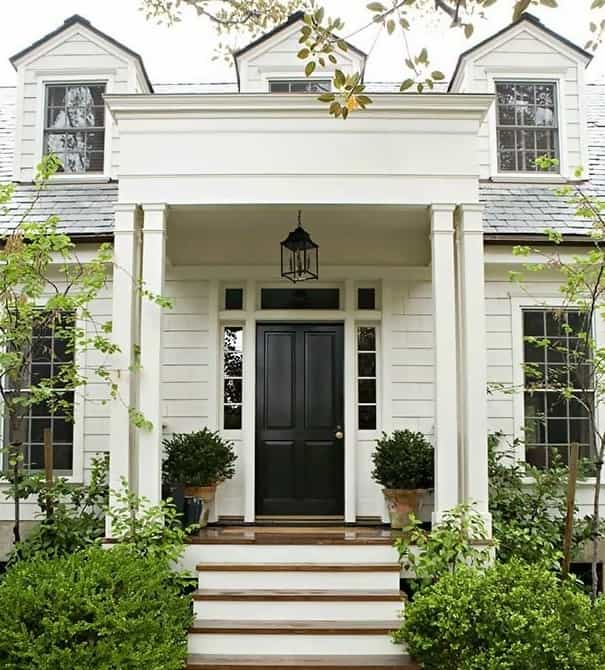 According to Zillow, in 2018, houses with black and charcoal front doors sold $6,271 more than expected. Probably, one good reason for this is that black is a versatile color for any siding material and color and in whatever style the house is in. It goes well with light and dark neutral tones, with brick, stone or clapboard siding and even with muted and pale colors such as sage and yellow, it’s still a perfect match.
Calming refreshing blues are perfect for any weather and for rooms where rest and relaxation are top priorities. It’s an elegant choice for living rooms, bathroom and bedrooms, particularly when the rest of your furnishing is in light, neutral colors. In living rooms with large windows and billowy linen drapes, the effect is just dreamy.

Keep your trims and accents white when paired with this blue. Beige furnishing and maple wood also go well with this color.
In bathrooms, choose a light blue color with a gray undertone but if the effect is too gloomy, switch to a more cheerful light blue like the Bird’s Egg blue.
A light shade of blue could also be used on kitchen cabinets without taking away the charm of wood and steel materials. In Zillow’s 2017 and 2018 analysis, bathrooms in light blue colors like periwinkle, the house sold for $5,400 more than expected and the trend continues on in 2019.

With pale and lighter colors, you want to pay attention to value and chroma. Value is the lightness and darkness of a hue, while chroma refers to the strength of the color. Knowing the value and chroma of lighter colors will avoid making your walls look like chalky Easter Eggs.
We did say that white is too plain and safe but it’s absolutely perfect if your home has a lot of mixed materials that are too beautiful to be overshadowed by paint. It also pairs well with a variety of wood tones if you’re planning to sell your wood furniture along with the house.
Choose a warm white color with yellow undertones for walls, trims, ceilings, and cabinetry. These work best for both traditional and modern homes. If you want some materials like stone or red brick to stand out, a more crisp and clean white is a good match and will make any room feel bright and airy.
The trick with white interior walls is to use different shades of white for the trims and ceilings to create contrast.

As an exterior color, white is perfect for any style of house. On Colonial, Georgian and Greek Revival houses, it pays homage to the roots of these styles by staying simple and formal. On Cape Cod houses, it plays along well with the coastal features and accents of the house.

In both warmer and colder climates, white houses either stand out against lush green landscapes or blend in magically with white snow in the winter.
If you’re targeting buyers with young children, stark white paint may not be the right color choice to attract them. White as an exterior paint may also need more maintenance than darker colors.
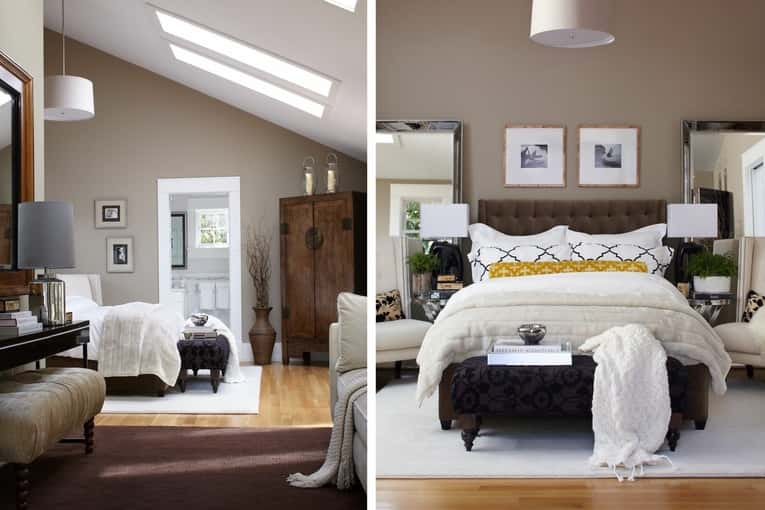
They say gray is the new white and it’s varying shades, Greige or Taupe has become the designer’s new favorite neutral and for a good reason; it’s  neither boring nor vibrant, it adds just the right amount of color. Greige can be pale or dark and you must pay attention to the undertones. Too beige, and it will be too brown, and too gray, it will be too dreary. The right greige will make a room feel fresh and light.
A light shade of gray on interior walls paired with a white ceiling and trims is safe and you can stage up a gorgeous room with much more colorful accents to balance the gloom of gray.
For exterior walls, the right shade of taupe is a classic and won’t get you into trouble with your homeowner’s association since it’s a very beautiful and safe neutral. Paired with a few bright accents like yellow or teal, a taupe house can be very charming. Avoid using darker or charcoal grays for the body of the house if it is located in areas with long winters where the color could quickly become depressing. Use it as a trim or accent color instead. Houses with gray or beige facades sold for $1,526 more than white houses since most homeowners deem white for exteriors as a color that often needs too much maintenance.
When you plan to sell your house, choose colors that are easy to paint over in case the new owner has different ideas in mind. Stick to classics and avoid trends. If you must absolutely use a bold and trendy accent color, use it subtly and sparingly.

Remember that you don’t need to paint every room in the house especially if you’re on a constrained budget. Instead, put your focus on the three most important rooms in the house: the living room, the kitchen, and the bathroom.
Curb appeal is also important when trying to sell your house. If a potential buyer sees an outdated exterior, they won’t even bother coming in to check the rest of your house. Don’t forget to call in the services of color experts and realtors if you need help in staging your home for selling. They’ll be able to tell you whether your walls really need a fresh coat of paint. Chances are you won’t even need to repaint some areas if everything is in pristine condition.
Kansas City Painting Company – Caring for Your Newly Painted Interior
So, you’ve just completed a brand-new interior painting project. The wall and trim are pristine, and you want to keep them that way. Just like the other surfaces in your home, a little preventative maintenance means less time later spent scrubbing. However, different types of paints require different types of care and there are various kinds of stains you may need to remove. Read more about how to clean stains and maintain your walls without ruining the paint.
General preventative maintenance means while you are vacuuming, use the soft brush attachment to collect dust and cobwebs You can also generally wipe them down with your duster using a dusting wipe or soft cloth covered with a dusting spray. Wipe fingerprints and other marks as soon as you notice them using a damp sponge. Avoid excess water when cleaning painted walls.
Always avoid scrubbing the surface too hard or you will create what’s called a burnish. This means you’ve smoothed out the original paint texture. The key to keeping walls clean is to react quickly as possible to the stain.
Before washing a painted surface know the type of finish or paint sheen being cleaned. The sheen level of the surface will determine how you approach the cleaning project.

The glossier the surface is, the more cleanable it is. These smooth surfaces resist stains and drip marks from water in bathrooms and kitchen.
So generally, we recommend a flat finish and egg-shell for living rooms, dining rooms, bedrooms, hallways. A satin or pearl finish works as well and adds a beautiful rich surface. Paints that are semi gloss or gloss we recommend mainly for kitchens, baths, trim, and doors.
These paint finishes are less washable when it comes to cleaning. Do not use harsh chemicals or degreasers when cleaning flat paint walls and be mindful when washing with a sponge to not scrub too hard or use excess water. The sponge should be wrung out almost completely before putting it to the walls. Although many modern formulated paints in flat and eggshell are more washable, exercise care, and perhaps test a small area first in an inconspicuous area before tackling wall front and center.
Semigloss and gloss paints are highly cleanable. That’s why so they’re used in high-traffic areas like kitchens, bathrooms, and on surfaces that are prone to dirt accumulation like trim, doors, and cabinets. You can use a mild degreaser on glossy surfaces. Gloss and semigloss paint is durable, but it will still scratch, use a soft sponge when cleaning surfaces with these paint sheens. Pay close attention to high-use areas like around doorknobs and light switches.
There are basically two kinds of stains that will get on your walls and other surfaces. Oil-based stains, like grease, shoe polish, crayon and water-based stains like ketchup, mustard, food, and wine. For water-based stains always start with a sponge damped with clean water. With oil-based stains, you may need to add a mild dishwashing soap like Dawn to dissolve the grease.
Generally, for any stain, it is advisable to start with pure clean water on a sponge. Always rub gently. If that doesn’t work mix a small amount of dishwashing soap into the water for oil-based stains. If the stain is still there, graduate to a few drops of soap directly on the sponge.
Finally, for stubborn stains, you can apply a product like Fantastik or Formula 409. These cleaners have strong chemicals in them. It’s important to rinse the walls (with clean water) after using them as they can soften the painted surface. The following paragraphs will give you some tips for cleaning various stains.
Make a paste with some baking soda. 50% soda, 50% water and then lightly scrub the marks. The marks should come off with just a small amount of effort. Remember to wipe off the gritty residue with clean water and a sponge. You can preheat the crayon marks with a blowdryer to melt them first, making the marks easier to remove.
There’s a reason why they call them “permanent”. Try dishwashing soap first. If  that’s doesn’t work, try cleaning with a small amount of rubbing alcohol in an inconspicuous spot to ensure it will not damage the surface, then tackle the stain. Some paint may come off along with the ink, so scrub carefully. It will most likely take several passes as the ink may spread and you’ll need to clean your sponge and use fresh alcohol.
A more aggressive treatment like Comet on a sponge is the last resort. At this point, you are adding an abrasive, which will damage the paint the more you use it. Get off as much marker as you can. If you’re not happy then get ready to touch up the paint using a stain-blocking primer first then top coat with matching paint.
Wine stains are difficult. The pigments in red wine actually dye the porous or semi-porous surface of the wall. If you’re dealing with a fresh stain, try immediately  dabbing with a clean damp sponge to remove any excess wine from the wall. Rinse your sponge then apply a small amount of common 3% hydrogen peroxide to the clean sponge. Dab the peroxide on to the stain. If this doesn’t work mix 1 part household bleach with 4 part water. Clean the wine stain with the bleach solution. Rinse the area well with fresh water.
If any red wine stains remain, continue to wash the wall with the bleach solution and rinse again. If the bleach and peroxide whiten a darker color, you may have to touch up your paint.